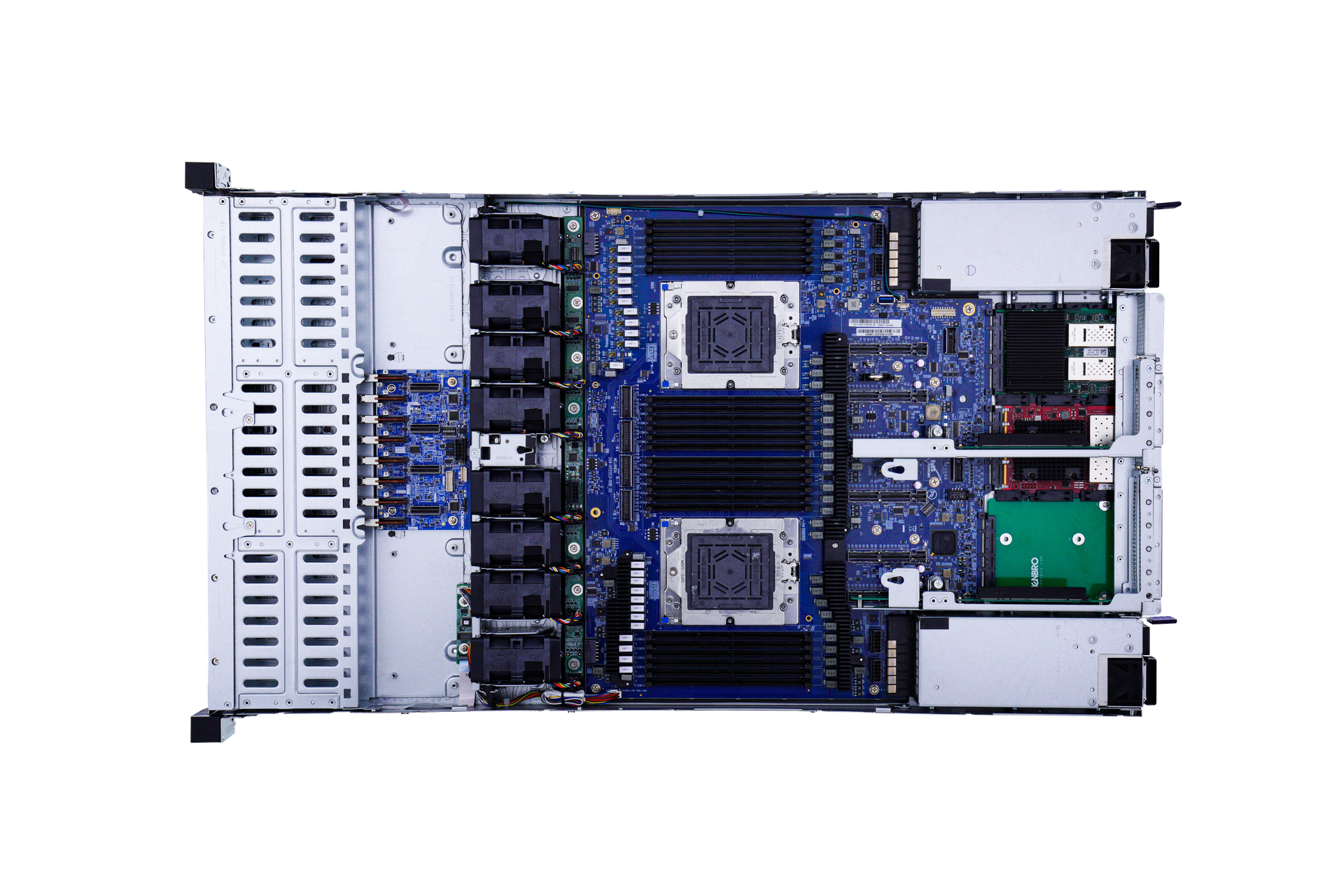
A complete, multi-vendor server platform reference design for POWER-class compute built on OCP DC-MHS and DC-SCM standards — integrating the OpenCore processor, OpenFSP service processor, and OpenHMC management console into a fully open, auditable, and domestically manufacturable hardware stack.
OCP MHS Reference Platform — ODM Design & Manufacturing Partners







Software sovereignty is necessary but not sufficient. An organization that audits its hypervisor and management console firmware but runs them on a server designed, manufactured, and serviced by a single vendor has not escaped infrastructure lock-in — it has merely moved the dependency one layer down.
The OCP Reference Platform project delivers the hardware layer of the Enterprise Sovereignty Initiative: a complete server platform reference design built on Open Compute Project standards, integrating the OpenCore processor (Project 01), OpenFSP service processor (Project 03), and OpenHMC management console (Project 02) into a platform that any qualified manufacturer can produce — in any geography, from multiple supply chains, with no proprietary design elements.
The platform targets the OCP DC-MHS (Data Center Modular Hardware System) standard for the compute module, DC-SCM v2.0 for the management controller, and Open Rack v3 for the rack power and infrastructure layer. These are existing, published OCP standards adopted by hyperscalers and increasingly by regulated industries as the basis for competitive, multi-vendor hardware procurement.
The Open Compute Project has become the dominant framework for competitive data center hardware procurement. Its standards separate the hardware specification from any single manufacturer, enabling organizations to issue competitive RFPs against published specifications rather than proprietary form factors. For regulated industries, OCP compliance means:
The compute module reference design is built around the OpenCore POWER ISA processor as its primary silicon target. The module design also accommodates IBM commercial POWER10/11 processors to support organizations transitioning from existing IBM hardware.
The DC-SCM slot on the compute module is the reference deployment target for OpenFSP. The platform hardware design is co-developed with the OpenFSP project to ensure the DC-SCM electrical and physical interface meets OpenFSP requirements.
OpenHMC manages compute modules through the OpenFSP Redfish API. The reference platform includes a validated, certified integration configuration — enabling Founding Members to deploy OpenHMC against the reference hardware with documented support.
OCP NIC 3.0 and PCIe card slots for AI accelerators, storage controllers, and SmartNICs. The platform targets compatibility with OCP-accepted accelerator designs to enable open AI inference deployments managed by OpenHMC.
For government agencies and critical infrastructure operators subject to national security procurement requirements, the OCP Reference Platform is designed to be manufactured domestically. Published hardware design files, standard OCP interfaces, and a manufacturing-ready BOM mean the platform can be sourced from any nation with semiconductor packaging and PCB manufacturing capacity — without requiring proprietary tooling, vendor partnerships, or technology transfer agreements from a single US commercial vendor.
Published requirements document covering compute, memory, I/O, power, thermal, and management interface. Input from Founding Members. Month 4.
Full schematic for POWER ISA compute module in DC-MHS form factor. KiCad source files, PDF exports, BOM. Month 14.
Verified electrical and mechanical interface between compute module DC-SCM slot and OpenFSP module. Test report. Month 12.
First physical prototype: compute module in DC-MHS chassis with OpenFSP on DC-SCM, managed by OpenHMC. Founding member evaluation units. Month 24.
Design for manufacturing guide, qualified component alternatives, and manufacturing partner qualification criteria. Month 28.
OCP Accepted submission, UL/CE/FCC certification path documentation, government procurement qualification guidance. Month 36.
The reference platform is not positioned as a disruptive replacement requiring immediate migration. Rather, the project will publish a staged transition architecture for organizations with existing IBM POWER deployments:
This path lets regulated industries begin the sovereignty transition immediately, without a flag-day cutover, and without abandoning existing IBM POWER investments.